What Teaching 350,000 Learners Taught Me About Better UX Teaching
Lessons from teaching at scale: how to build clarity, confidence, and practical capability in UX and product teams without turning learning into performance theatre.
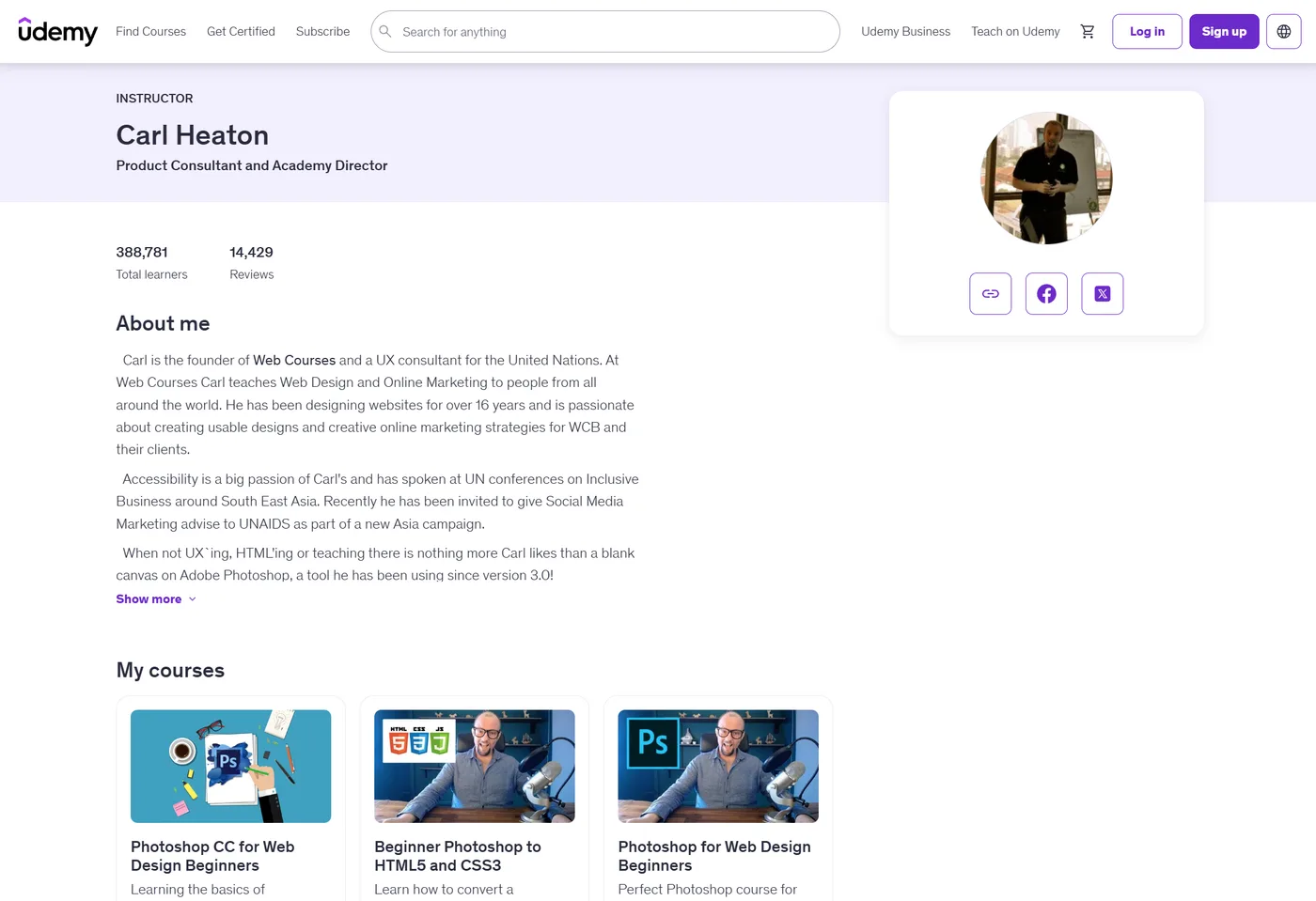
When I started Web Courses Bangkok, I thought I was going to teach design. After years of running it, hundreds of in-person workshops, and reaching somewhere over 350,000 learners across various formats, I now understand that teaching design wasn't really the job at all. The job was teaching people how to think about a hard, ambiguous, often-isolating discipline in a way that didn't break them. The skills were the easy part. The relationship to the work was where the actual transformation happened, and where I made every mistake a first-time educator makes before I figured it out.
What follows is the condensed version of what those 350,000 learners taught me, mostly through the patient, sometimes-not-so-patient feedback they gave me whenever I got it wrong. If you've ever taught a workshop, mentored a junior designer, or thought about doing either, some of this will be useful.
Key lessons at a glance
- Build confidence early, because confidence determines whether competence has a chance to compound.
- Teach less content than you think you should, and protect room for practice and reflection.
- Use stories from real product and design work to make principles memorable and transferable.
- Teach critique as a skill, not a personality trait, so teams can challenge ideas without damaging people.
- Design workshops around peer interaction and end with clear commitments learners will act on.
Lesson one: confidence is more important than competence early on
When someone is learning design, their main enemy is not their lack of skill. It's their suspicion that they're not the kind of person who can ever be good at this. I used to spend the first day of a workshop drilling fundamentals. Type. Grid. Hierarchy. Colour theory. The students would dutifully take notes and leave that night convinced they had a long way to go. Half of them would mentally quit by day three.
Eventually I redesigned the first day to be almost entirely about producing one tangible thing they could be proud of, even if it was technically rough. The shift in week-three retention was dramatic. People who feel like a designer at the end of day one will work twice as hard for the rest of the course. People who feel like a fraud at the end of day one will spend the rest of the course defending their ego instead of learning. Confidence first. Competence will follow if confidence holds.
Lesson two: cover less, much less
Every new educator over-packs. I did. The instinct is generosity. You have so much to share, you've earned all this hard-won knowledge, the students are paying, you should give them everything. So you compress sixteen hours of learning into eight hours of lecture and produce zero hours of actual transformation. Less is more. Much less. I gradually cut my course content by about half, and the outcomes for learners doubled. Coverage and learning are not the same thing.
The discipline I eventually settled on was ruthless. For every hour of teaching, I'd ask myself: "if a learner only takes one thing from this hour, what is it?" If I couldn't answer that question in a single sentence, the hour wasn't ready to teach. The exercise of answering that question for every hour of a curriculum is itself the most valuable thing an educator can do. It forces priorities. It exposes filler. It makes the course better for the learner and easier for the teacher.
Lesson three: stories beat slides, every time
I used to teach "design principles" with bulleted slides. Then I noticed that the moments students actually wrote down in their notebooks were the moments I'd forget the slides and tell a story from a real project. The fight with the CEO. The redesign that flopped. The launch that quietly worked. The slides were forgettable. The stories stuck. After a year of this, I retired the bulleted lists and rebuilt every workshop around stories: concrete, specific, with names and stakes and decisions.
Lesson four: critique is a craft you have to learn separately
Most designers think critique is something you intuit. It isn't. It's a learnable skill, and the worst critique is what gets handed down by senior designers who never learned to do it well. Bad critique is opinion-led, ego-protecting, and crushing in ways the giver doesn't see. Good critique is structured, kind, and ruthless about the work without ever being ruthless about the person.
I now teach critique as its own module, separately from any design skill. I teach learners to give feedback in the form of three observations, one question, and one suggestion. I teach them to wait three seconds after asking the question. I teach them never to start a critique with "I don't like": replace it with "I notice that..." and let the observation do the work. These small linguistic disciplines change what a feedback session feels like. Learners who pick them up early are better collaborators their whole career.
Lesson five: the room is doing more teaching than you are
It took me embarrassingly long to realise that, in any workshop of more than ten people, the most powerful learning was happening between participants, not between me and them. Pair exercises. Breakout discussions. Peer reviews. The participants were teaching each other things in their own language that I, with all my expertise, could never teach in mine. My job was to set up the conditions, not to be the source of all wisdom.
Once I understood this, I redesigned my workshops to maximise peer interaction and minimise me-time. I now spend less than thirty percent of any workshop talking. The rest is structured exercises with peer feedback, with me roaming, listening, occasionally interjecting. Course feedback improved. So did the depth of what learners actually retained. The lesson generalises beyond teaching: in any room of more than ten capable people, your job is to design the interactions, not to be the centre of them.
Lesson six: end with a commitment, not a goodbye
The last hour of any workshop used to be a wrap-up. A summary. A thanks. Then I noticed that learners would leave inspired and, two weeks later, do nothing different. The transfer from workshop to working life is where most learning quietly evaporates. So I changed the last hour. Now it's a commitment session. Every learner writes down one specific thing they will do differently in the next two weeks, shares it with a partner, and exchanges contact details. Three weeks later, they get a single email asking how it went.
The follow-through rate on the commitments is not perfect. But it is roughly four times what it was when the workshops ended with a thank-you. That single change has done more for the long-term impact of my teaching than any improvement to the curriculum. Designing for what happens after people leave the room is most of the job.
What I'd never change
There are things I got right early and would never alter. I never lectured for more than twenty minutes without a break. I never finished a day without giving learners time to make something tangible. I never forgot that people who pay to attend a workshop are giving you not just their money but their time and their hope, and the contract you have with them is to honour both. I never let myself believe that the workshop existed for me to be impressive. It existed for them to leave better than they arrived.
If you're stepping into teaching design, in any format, formal courses, internal mentorship, conference talks, team workshops, the patterns generalise. Confidence before competence. Less coverage. Stories over slides. Critique as a craft. Peer learning as the engine. Commitments at the end. None of these are clever. All of them are the difference between teaching that produces a notebook full of notes and teaching that produces, six months later, a different person doing different work.
Why this matters for design leadership now
The reason this matters beyond workshops is simple: modern product teams are learning teams. Design leaders are no longer just shipping interfaces; we're shaping how teams think, how they critique, how they decide, and how they build confidence in ambiguous environments. The same teaching patterns that help learners grow also help product organisations make better decisions under pressure.
If you're leading design, UX, or product today, treat every review, roadmap conversation, and cross-functional session as a teaching moment. Build confidence early, keep expectations clear, and make commitments visible. Teams that learn well ship better work, recover faster when things go wrong, and build healthier cultures while they do it.
In short
Practical checklist
- Start with learner context and current capability.
- Sequence learning into clear, practical steps.
- Use feedback loops that build confidence, not performance anxiety.
- Measure transfer to real work, not content completion alone.
- Ground examples in evidence learners can trace back to real work.
When to use this approach (and when not to)
- Use this approach when decisions carry customer, revenue, or delivery risk.
- Use it when multiple teams need consistent quality standards.
- Use it when you need repeatable outcomes, not one-off output.
- Do not prioritise curriculum coverage over confidence and application in the room.
- Do not lecture through decks when stories and peer practice carry the learning.
- Do not end sessions without a concrete commitment learners will act on soon.
If you want learning that sticks
If you want to improve how your team learns and applies UX practice, start with one real workflow and redesign the learning loop around it. I can help you shape that capability plan with your leaders.
Frequently asked questions
What improves learning outcomes most in UX education?
Clear sequencing, practical exercises, and timely feedback. Learners progress faster when confidence and application are built together.
How should teams apply these teaching lessons internally?
Treat enablement like product design: understand learner context, reduce cognitive load, and design clear next actions after every session.
Which teaching pattern scales best?
Clear sequencing, practical application, and feedback loops that build confidence quickly.
How can product teams use these teaching lessons?
Design onboarding and enablement like a learning journey with explicit outcomes and reinforcement.
What should be validated in large-scale teaching claims?
Learner counts, timeframe, completion context, and evidence of transfer to real work.